A 3 mm UV sheet can be a practical choice when your project needs a lightweight panel, clear visibility, and dependable resistance to sunlight. But thickness alone does not guarantee UV performance. The base material, protective coating, and installation conditions matter too. Dr. George Wypych, known for his work on polymer weathering, offers a useful principle: assess a plastic’s formulation and exposure conditions together. In other words, compare product specifications—not just thickness—before you buy.
Picture a greenhouse panel facing afternoon sun, or a small outdoor sign exposed to rain and dust. A Uv Sheet 3mm Sheet may suit these applications when its manufacturer confirms the required UV protection and intended use. Check the product data for light transmission, temperature limits, and warranty coverage. Also confirm whether the UV-protective layer must face outward. Small detail. Easy to miss.
The right panel can be easier to handle than a thicker sheet, yet 3 mm may flex across a wide, unsupported span. Measure the frame, support spacing, and expected load before cutting. Use compatible fasteners, and avoid overtightening near the edges. One caveat: “UV sheet” can describe different plastics and coatings, so the label alone tells you little. This guide will help you weigh durability, clarity, fabrication, and cost, while recognizing that real performance depends on the specific product and site conditions.
Why Choose a 3mm UV Sheet for Your Project?
What Is a 3mm UV Sheet?
A 3mm UV sheet is a flat polymer panel, roughly the thickness of three stacked coins. “UV” usually means the material contains ultraviolet stabilizers or has a protective surface layer. It does not identify the polymer: acrylic and polycarbonate are common options, with different clarity, impact strength, and forming behavior. Check the product datasheet before specifying it.
Thickness alone does not guarantee outdoor life. The World Health Organization’s ultraviolet-radiation fact sheet reports that UVA makes up about 95% of the UV radiation reaching Earth’s surface; a sheet’s protection depends on its formulation and tested performance. A clear panel can still yellow or lose strength over time. Small detail, big consequence.
For comparison, solid polycarbonate at a typical density near 1.2 g/cm³ weighs about 3.6 kg per square metre at 3mm thick. Actual weight varies by resin and construction. ASTM G154 describes fluorescent-UV exposure testing, but test hours do not translate directly into years outdoors. Ask for the test conditions and retained-property data, not just a “UV-resistant” label. A tight bend or unsupported span may also cause trouble; 3mm can flex more than a drawing suggests.
Why Choose a 3mm UV Sheet for Your Project?
UV protection in sheet materials comes from their formulation or surface treatment, not thickness alone. A 3mm sheet can block some ultraviolet radiation when it contains UV-absorbing additives or has a protective coating. These measures reduce UV reaching the material behind the sheet and can slow fading or surface damage. They do not necessarily block all UV. Performance varies by material and product specification.
Tips: Check the product data for UV transmission and whether protection applies to one or both sides. Install the protected face as directed. Keep a small offcut to confirm the correct side before fitting. Simple, but easy to overlook.
A sheet’s clarity, thickness, and UV performance are separate properties. A thicker sheet is not automatically better at blocking sunlight. Scratches, aging, and exposed edges may also affect long-term performance, depending on the material. For an outdoor cover, check the stated exposure rating and expected service conditions. One detail can be frustrating: test results may use different methods, so compare specifications carefully rather than relying on a general “UV resistant” label.
| Data dimension | Factual information | What it means for a 3mm UV sheet | Project consideration |
|---|---|---|---|
| Nominal thickness | 3 mm equals approximately 0.118 in (about 1/8 in). | Thickness describes the sheet’s physical gauge; it does not, by itself, specify its UV-blocking performance. | Check the required span, support spacing, impact resistance, and load limits for the chosen material and design. |
| UV wavelength bands | UVA is commonly defined as 315–400 nm, UVB as 280–315 nm, and UVC as 100–280 nm. | A sheet’s UV performance depends on how much radiation it transmits across the relevant wavelengths, not just on its thickness or appearance. | For sensitive displays, artwork, or materials, request spectral-transmission data covering the UV range of interest. |
| How UV protection works | UV protection may come from UV-absorbing additives blended into the sheet or from a UV-resistant surface layer. Some products use both approaches. | The formulation and construction determine the protection. A clear-looking sheet can still absorb or reduce UV, but clarity alone does not prove UV performance. | Confirm the stated UV performance and whether protection is integral, surface-applied, or limited to one face. |
| One-sided versus two-sided protection | Certain sheet products have a UV-protective layer on one face; other products are designed for exposure on both faces. | If the UV-resistant face is installed inward or otherwise incorrectly oriented, the sheet may not perform as intended. | Check product markings and installation instructions before removing protective film or fixing the sheet in place. |
| UV transmission data | UV-visible spectrophotometry can measure transmission across selected wavelengths. Results depend on the tested wavelength range, specimen, and test conditions. | A specific transmission value should not be assumed for all 3mm UV sheets or material types. | Compare test data from the same wavelength range and ask whether the figure applies to the exact thickness and product construction. |
| Outdoor weathering | Sunlight, heat, moisture, abrasion, and cleaning practices can affect a sheet’s appearance and service life. Performance varies by polymer, formulation, and exposure conditions. | UV resistance can help reduce UV-related degradation, but it does not make a sheet immune to all weathering or guarantee a fixed service life. | For exterior use, check the material’s weathering guidance, maintenance recommendations, and any applicable warranty conditions. |
| Typical project fit | A 3mm sheet may suit lightweight covers, guards, signs, or glazing applications when the material and design are appropriate. | The appropriate thickness depends on dimensions, support, wind or impact loads, temperature, and the chosen polymer. | Treat 3mm as a thickness choice—not a structural rating—and verify the design for the intended application. |
Note: UV transmission and durability vary by material, product construction, thickness, and test method. Use technical data for the exact sheet being considered.
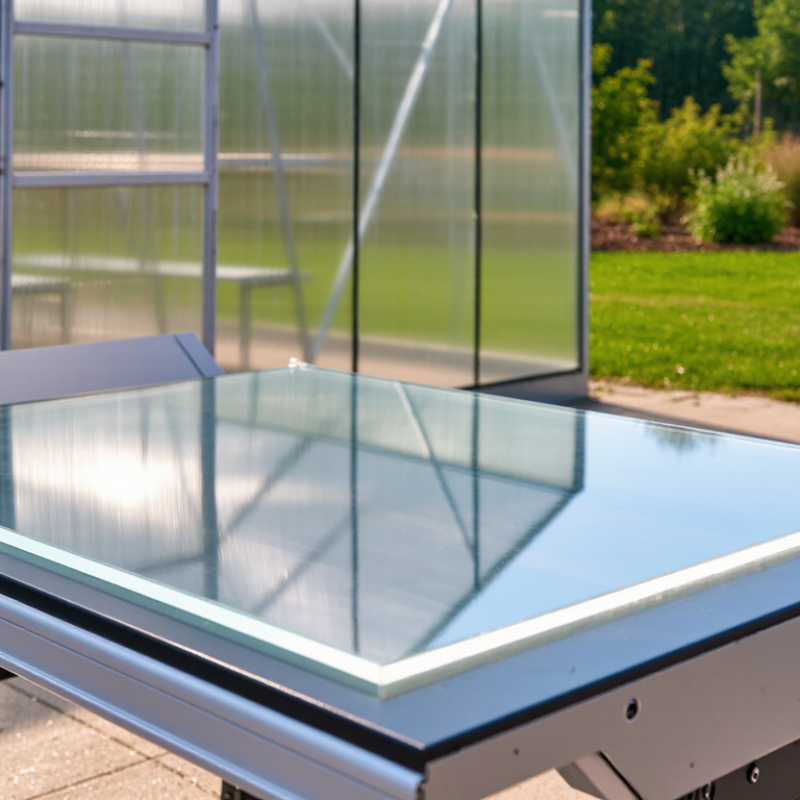
A 3mm UV-protected sheet is best suited to light-duty projects with short spans and modest loads. It can work well for small greenhouse side panels, indoor partitions, cabinet inserts, signs, and splash guards. The thin profile is easy to handle and cut. Keep spans short. For a greenhouse, picture a narrow panel between closely spaced supports, not a broad roof section exposed to wind or snow.
Daylighting can matter in building design, but a thin sheet alone does not guarantee energy savings. The 2023 Global Status Report for Buildings and Construction, published by UNEP and the Global Alliance for Buildings and Construction, estimates that buildings accounted for 34% of global energy demand and 37% of energy- and process-related carbon emissions in 2022. Those figures explain why designers consider daylight; they do not prove that any one panel reduces energy use.
Before choosing 3mm, check the sheet’s material, supported span, fixing method, and UV-treated face. A panel that seems sturdy on a workbench may flex once installed. For overhead or exposed applications, verify load guidance with the supplier and consider a thicker sheet or closer supports.
I would not stretch a 3mm sheet into a structural role just because it is easy to install. Measure twice.
A 3 mm UV sheet can suit a greenhouse side panel, a small canopy, or a clear workshop screen. It is light enough to handle and cut on site, and its UV-resistant layer may help slow yellowing and surface deterioration. But thickness alone does not establish UV protection. Check the supplier’s measured UV transmission, visible-light transmission, and haze figures before choosing a panel.
The World Health Organization’s Global Solar UV Index guidance classifies readings of 3–5 as moderate, 6–7 as high, and 8 or above as very high. That matters outdoors. Yet a sheet’s protection depends on its material, coating, and test results—not the UV Index alone. ASTM D1003 measures light transmission and haze; ASTM G154 provides a method for accelerated UV exposure testing. Ask for test data, because an accelerated test does not guarantee a specific service life.
Three millimeters is convenient, but it flexes more than a thicker panel. Long unsupported spans may bow in wind, and poorly sealed edges can admit water or dirt. Small details matter. Plan supports around the sheet’s stated load limits, leave room for thermal movement, and use compatible fasteners. I would not assume a clear panel stays perfectly clear; dust, scratches, and weather can change its appearance over time.
What this shows: At 3mm, a solid polycarbonate sheet has an estimated mass of 3.6kg/m², offering a lighter option than thicker sheets. The estimate uses a typical density of 1.20g/cm³ and is calculated as thickness × density; actual product weights vary. A thinner sheet may provide less stiffness than a thicker one, so check the product specifications and support requirements. UV protection depends on the sheet’s UV treatment, not its thickness.
Choosing a 3mm UV sheet starts with the job it needs to do. Check whether it is intended for roofing, glazing, or a protective screen; these uses can require different materials and support spacing. Compare the sheet’s light transmission, impact resistance, and UV protection, and confirm which face should point outward. A printed film or edge marking may identify it. If not, check the supplier’s product instructions rather than guessing.
Measure the frame in several places; older frames are rarely perfectly square. Leave room for thermal movement, using the clearance recommended for that specific sheet.
Cut with a fine-tooth blade and support the panel to limit vibration. Wear eye protection. Dry-fit it before removing any protective film. Small detail, big difference. Drill clearance holes where specified, then secure the sheet with compatible washers without crushing it.
On site, a dry fit often reveals a tight corner that measurements miss. I still find it easy to rush this part. Seal exposed edges only with materials approved for the sheet, and avoid cleaners that can cloud or weaken the surface.
After installation, check that water can drain and that no fastener is pulling the panel out of shape.
It is a flat polymer panel, about as thick as three stacked coins. “UV” usually refers to stabilizers or a protective surface layer, not a specific polymer.
Acrylic and polycarbonate are common options. They differ in clarity, impact strength, and forming behavior, so check the product datasheet before choosing.
No. Protection depends on the material, coating, and tested performance. A clear panel may still yellow or weaken over time. Small detail, big consequence.
Solid polycarbonate at a typical density weighs about 3.6 kilograms per square metre at 3mm thick. Actual weight varies with resin and construction.
It may suit a greenhouse side panel, small canopy, or clear workshop screen. Its light weight can make handling and on-site cutting easier.
Ask for measured UV transmission, visible-light transmission, haze, and exposure-test results. Accelerated testing can help compare products, but it does not promise a specific outdoor lifespan.
It may flex or bow, especially across a long span or in wind. Follow the stated load limits and plan suitable supports. I would not guess from a drawing alone.
Allow room for thermal movement, use compatible fasteners, and seal edges to limit water and dirt. Dust, scratches, and weather can change the panel’s appearance. It will not stay perfect.
A 3mm UV sheet is a relatively lightweight sheet material designed to reduce damage from ultraviolet exposure. Depending on its construction, UV protection may come from a protective coating or additives that help limit fading, yellowing, and loss of strength. A Uv Sheet 3mm Sheet can suit projects such as signs, display covers, light-duty partitions, and other applications where low weight and some weather resistance are useful.
Before choosing one, consider its material, clarity, flexibility, expected exposure, and the level of strength your project requires. At 3mm thick, it may not be appropriate for heavy loads, high-impact areas, or applications needing substantial insulation. Check which side should face outward, allow room for movement caused by temperature changes, and use suitable supports and fasteners during installation. Matching the sheet to the conditions and handling it carefully can help achieve a practical, durable result.

Rongsen