Choosing the right 3d Uv Marble Sheet manufacturer requires more than comparing catalog prices. Global buyers must examine surface realism, dimensional stability, printing quality, and long-term supplier support. A convincing marble pattern may look impressive under showroom lighting. However, uneven gloss or weak backing can appear after installation.
According to David Chen, an independent decorative-surface materials consultant, “A reliable sheet must perform beautifully after installation, not only in a product photograph.” His observation reflects a practical purchasing lesson. Experienced buyers request physical samples, production specifications, and recent project references. They also check sheet thickness, UV coating consistency, scratch resistance, moisture performance, and color matching between batches. Small details matter. A two-millimeter variation can complicate wall alignment.
This guide reviews the top 3d Uv Marble Sheet manufacturers serving international buyers. It considers manufacturing capacity, customization options, quality-control procedures, packaging, communication, and export experience. Suppliers with modern printing lines may offer sharper veins and more natural depth. Yet technology alone does not guarantee dependable results. Some manufacturers communicate well before payment, then respond slowly when problems occur. That risk deserves attention.
Buyers should also question claims such as “waterproof” or “fire-resistant.” These terms require clear testing evidence and suitable application conditions. No supplier should be trusted only because its website looks polished. A factory visit, third-party inspection, or verified customer feedback can reveal important differences. This comparison is not perfect. Product performance can vary by batch, climate, installation method, and maintenance. Careful verification remains essential before placing a large international order.
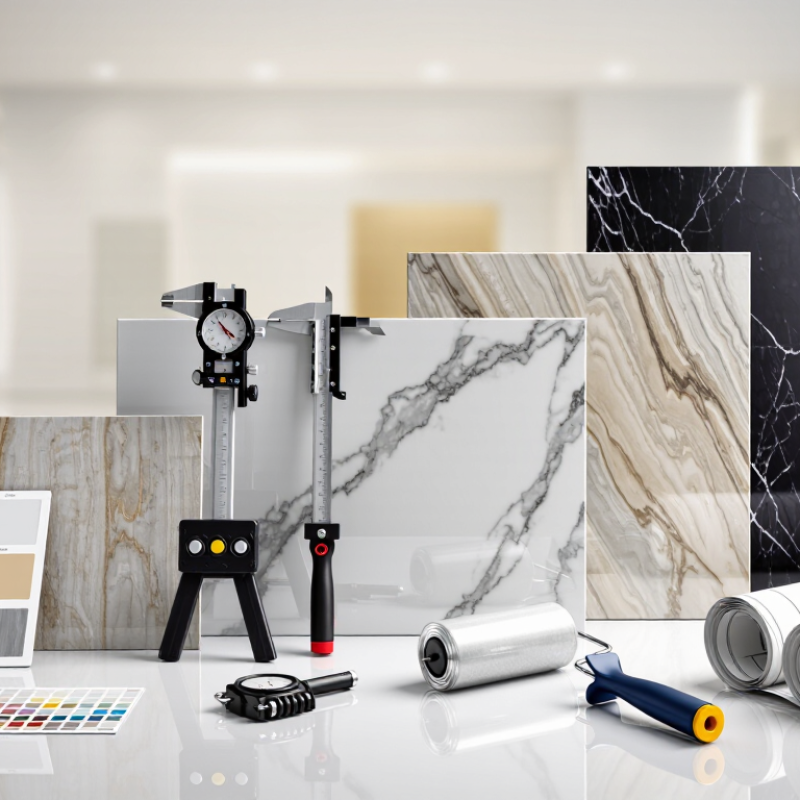
3D UV marble sheets are decorative wall panels designed to imitate the depth, veins, and gloss of natural marble. They usually combine a rigid substrate, a printed stone pattern, and a UV-cured protective coating. Some products also use embossed textures, creating shadows that change under directional light. The result is lighter than stone and easier to transport across borders. Installation may involve cutting, bonding, and sealing around joints. Measure carefully.
In practice, quality depends on more than a realistic image. Global buyers should request thickness data, surface hardness results, fire-performance documents, and moisture-resistance information. Experienced manufacturers can explain substrate composition, printing accuracy, batch variation, and recommended adhesives. Ask for physical samples, not only digital photographs. A sample may reveal pinholes, uneven gloss, or weak edge finishing. These sheets suit feature walls, hotel interiors, retail spaces, and selected wet-area applications, provided the product is certified for that environment. They are not natural marble. Minor pattern repetition can also appear across large installations. That limitation deserves attention. Reliable production teams should provide installation guidance, packaging details, inspection records, and clear tolerances before shipment. A practical trial order often exposes problems that a polished catalogue hides.
| Specification / Evaluation Dimension | Common Industry Information | Why It Matters to Global Buyers | Recommended Verification |
|---|---|---|---|
| Product category | Decorative interior wall and ceiling panel with a printed marble pattern and UV-cured surface finish. | Helps buyers distinguish decorative cladding from natural marble, ceramic tile, and structural panels. | Request the product construction diagram and intended-use statement. |
| Typical substrate | Common substrates include PVC-based decorative boards; other constructions may use composite or mineral-filled cores. | The substrate affects weight, rigidity, moisture behavior, cutting performance, and installation method. | Confirm the core material, formulation, thickness tolerance, and technical data sheet. |
| Common panel dimensions | Large-format sizes such as approximately 1,220 × 2,440 mm are commonly offered; actual sizes vary by manufacturer and market. | Panel size influences transport efficiency, waste percentage, handling, and wall-joint layout. | Confirm the finished size, usable coverage, squareness, and packing dimensions. |
| Typical thickness options | Thin decorative panels are frequently produced in approximately 2.5–3.0 mm options, while thicker constructions are also available. | Thickness affects stiffness, cutting, corner treatment, impact resistance, and compatibility with trims. | Ask for nominal thickness, tolerance, panel weight, and installation recommendations. |
| Surface finish | Common finishes include high-gloss, glossy, satin, and embossed or textured marble-effect surfaces. | Finish selection affects visual appearance, reflection, cleaning, and the visibility of fingerprints or scratches. | Approve a physical sample under the intended lighting conditions. |
| UV coating function | A UV-cured coating is hardened using ultraviolet light and is used to provide surface protection and visual gloss. | Coating quality influences stain resistance, gloss retention, abrasion behavior, and appearance consistency. | Request coating test results, gloss information, abrasion data, and cleaning instructions. |
| Water and humidity suitability | Many PVC-based decorative panels are marketed for moisture-prone interior areas, but water resistance does not automatically mean waterproof installation. | Bathrooms, kitchens, and humid climates require suitable joints, adhesives, edge sealing, and ventilation. | Confirm the approved wet-area applications and installation limitations in writing. |
| Installation method | Common methods include adhesive installation on a suitable smooth substrate; trims, joint profiles, and mechanical support may be required. | Correct preparation reduces bubbling, detachment, open joints, and visible substrate irregularities. | Obtain an installation manual covering adhesive type, substrate flatness, expansion gaps, and cutting tools. |
| Fire performance | Fire behavior depends on the complete panel construction, including the core, coating, adhesive, and installation system. | Fire requirements differ between countries and may be mandatory for commercial, hospitality, and public projects. | Request a valid fire-test report for the exact product construction and target market. |
| Quality-control checkpoints | Key checks include color consistency, marble-pattern alignment, gloss uniformity, thickness, dimensions, flatness, and surface defects. | Consistent inspection helps reduce shade variation, warped panels, scratches, and installation waste. | Use a pre-shipment inspection plan with agreed acceptance limits and retained samples. |
| Packaging and logistics | Large panels generally require protective film, corner protection, rigid cartons or crates, and moisture-conscious container loading. | Good packaging reduces edge damage, surface scratching, bending, and claims during international transport. | Confirm pieces per carton, cartons per container, gross weight, loading plan, and replacement policy. |
| Compliance documentation | Depending on the destination, buyers may require technical datasheets, safety information, test reports, declarations, or sustainability documentation. | Complete documentation supports customs clearance, project approval, and local regulatory compliance. | Check requirements for the destination country before production and shipment. |
Reliable manufacturers begin with a stable PVC or composite substrate. The surface is cleaned, leveled, and checked for dust or pinholes. A marble design is printed with controlled ink coverage, then cured under ultraviolet lamps. Next, a clear UV layer protects the pattern from moisture, stains, and daily abrasion. Embossing creates veins and stone-like depth. Heat and pressure must remain consistent. Small changes can affect the final texture.
Quality teams test each production batch, not only the first sample. They measure thickness, gloss, color difference, and dimensional stability. Cross-hatch adhesion tests show whether the coating bonds correctly. Abrasion, stain, humidity, and heat tests reveal weaknesses that may appear during installation. Inspectors also compare sheets under different lighting conditions. A surface can look perfect in a showroom but uneven beside a window. That mistake deserves attention.
Tips: Ask for recent test records and physical samples. Check the back surface, edge trimming, and protective film. Confirm packaging for long-distance shipping. Request color tolerance information before approving a large order. Remember that natural-looking variation is useful, but uncontrolled variation is a defect. No laboratory test predicts every jobsite condition, so trial installation remains valuable.
Top 3D UV Marble Sheet Manufacturers for Global Buyers
For global buyers, leading 3D UV marble sheet manufacturers should offer more than attractive stone patterns. They need stable thickness, clear technical data, and repeatable surface quality. During sourcing, inspect full-size samples under daylight and warm indoor lighting. Small color shifts can become obvious across a large wall. Check the substrate, UV coating, embossing depth, and edge finish. A realistic sheet should show controlled gloss, clean veining, and strong adhesion after cutting.
Reliable manufacturers usually provide batch records, packaging specifications, and test results for scratch resistance, moisture exposure, and surface hardness. Ask how they control printing alignment and coating thickness. These details affect installation speed and long-term appearance. Buyers should also confirm sheet dimensions, allowable tolerances, minimum order quantities, and replacement procedures. Export experience matters. Proper pallets, corner protection, product labels, and complete shipping documents reduce avoidable problems.
No factory is perfect. A polished sample can hide production variation. Request samples from different batches when possible. Test one piece with common cutting tools and construction adhesive before placing a large order. Some suppliers may promise fast delivery, yet their capacity changes during busy seasons. That deserves a careful question. Manufacturers serving international markets should explain material composition, applicable safety documentation, and destination-country requirements without making vague claims. A transparent supplier may admit limitations. That is often more useful than impressive language.
Common panel formats used as practical benchmarks when comparing international 3D UV marble sheet suppliers.
The chart compares commonly specified panel sizes of 1220 mm width with lengths of 2440 mm, 2800 mm, and 3000 mm. Surface areas are calculated from the listed dimensions and can help global buyers evaluate packaging, installation efficiency, and container utilization. Actual availability may vary by supplier and market.
When evaluating 3D UV marble sheet manufacturers, buyers should inspect more than surface appearance. A realistic sheet needs consistent veining, stable gloss, and clean edge finishing. Check thickness with a digital caliper at several points. Small variations can create visible gaps during installation. The UV coating should resist scratches, stains, moisture, and common household cleaners. Ask for abrasion, adhesion, colorfastness, and formaldehyde test results from recognized laboratories. A certificate alone is not proof of current production quality.
Reliable manufacturers usually operate documented quality systems, such as ISO 9001, but buyers should verify the certificate number and scope. Depending on the destination, request applicable REACH, RoHS, fire-performance, or indoor-air-emission documentation. Requirements differ by market. Do not treat one test report as universal approval. Production samples should match the approved reference in color, texture, gloss, and panel flatness. Photograph both sides.
Customization also needs precise control. Confirm panel dimensions, thickness, marble pattern, embossing depth, gloss level, backing material, and protective film. Color samples are essential. Screen images can mislead. Ask about minimum order quantities, repeat-order consistency, lead times, and export packaging. Corner protectors, moisture barriers, and reinforced pallets reduce transit damage. In practice, impressive samples sometimes hide weak backside bonding or uneven coating. Buyers should test a small batch before committing to large volumes. That step costs time, but it can expose problems early.
Comparing 3D UV marble sheet manufacturers requires more than checking the lowest quotation. Request a detailed price breakdown for sheets, protective film, packing, and export documents. Confirm thickness, surface finish, UV coating, color consistency, and acceptable size tolerance. A low price may hide weaker backing or higher replacement costs. Details matter. Ask for a physical sample before placing a large order, and compare it under natural and indoor light.
Shipping can change the final cost significantly. Compare FOB, CIF, and door-to-door offers using the same quantity and destination. Check pallet dimensions, loading capacity, transit time, insurance, and customs responsibilities. Strong suppliers provide clear packing photos and tracking updates. They should also explain how they handle damaged panels or missing cartons. In practice, service quality is often tested after payment, not during negotiation. A fast reply is useful, but a precise reply is better. Some suppliers promise short lead times without confirming production capacity, which deserves careful questioning.
Tips: Build a simple comparison sheet with product cost, freight, taxes, sample fees, and possible waste. Request test reports when available, but verify that they match the exact sheet specification. Review one small shipment first. It may feel slower, yet it exposes packaging and color issues early. Keep all agreed details in writing, including replacement terms, inspection timing, and delivery responsibilities.
Check thickness, veining, gloss, embossing depth, substrate, adhesion, and edge finishing. Use daylight and warm indoor lighting. Small color shifts become visible on large walls. Test full-size samples whenever possible.
Measure several points with a digital caliper. Uneven thickness may create visible installation gaps. Record each measurement. Small differences matter.
Request scratch, abrasion, moisture, adhesion, colorfastness, hardness, and cleaner-resistance results. Ask for reports from recognized laboratories. A certificate alone is not enough. Current production should match the tested material.
Compare approved samples with production samples. Check color, texture, gloss, panel flatness, and edge cleanliness. Photograph both sides. Imperfections may appear under different lighting.
Confirm dimensions, thickness, marble pattern, embossing depth, gloss level, backing material, and protective film. Screen images can mislead. Request physical color samples. Written details reduce misunderstandings.
Ask for material composition, test reports, batch records, packaging specifications, and shipping documents. Depending on the destination, safety and indoor-air documents may apply. Requirements differ by market. Do not assume one report covers every country.
Check corner protectors, moisture barriers, reinforced pallets, labels, and complete export documents. Poor packaging can damage clean edges during transport. Ask for photographs before shipment. This simple step is often overlooked.
No. Test a small batch first. Cut one sheet with common tools and apply construction adhesive. Inspect the backside bonding and coating uniformity. A polished sample can hide production variation.
Ask for realistic lead times, minimum order quantities, replacement procedures, and repeat-order consistency. Confirm capacity during busy seasons. Fast promises may not survive high demand. That deserves careful questioning.
This guide explains what a 3d Uv Marble Sheet is and why it is increasingly used for interior walls, furniture surfaces, ceilings, and commercial decoration. These lightweight panels are designed to imitate the appearance of natural marble while offering easier installation, consistent patterns, and practical resistance to moisture and everyday wear. The article also outlines how the sheets are produced through surface preparation, decorative printing, UV coating, curing, and quality testing, including checks for thickness, color consistency, adhesion, flatness, and durability.
For global buyers, the guide presents how to evaluate leading manufacturers without relying only on product appearance. It highlights important quality systems, certifications, customization options, packaging requirements, and sample approval procedures. Buyers can also compare suppliers by reviewing material specifications, production capacity, minimum order quantities, pricing structure, shipping terms, lead times, after-sales support, and communication efficiency. By considering these factors together, importers, distributors, contractors, and project owners can select reliable products and suppliers that match their design, performance, budget, and delivery requirements.

Rongsen