Top 10 Outdoor Wall Board Manufacturers Worldwide

Time:2026-10-16 Author:Ethan
0%

The global demand for durable, efficient façades is reshaping the Outdoor Wall Board industry. Buildings and construction produced approximately 37% of global energy-related carbon emissions in 2022, according to the United Nations Environment Programme’s 2023 Global Status Report for Buildings and Construction. That figure makes material selection more consequential. Exterior boards influence insulation, moisture control, fire performance, maintenance, and service life.

This guide examines the Top 10 Outdoor Wall Board Manufacturers Worldwide through practical criteria. These include product durability, testing standards, regional availability, technical support, environmental disclosures, and installation guidance. Market visibility alone is not enough. A familiar brand may still perform poorly in a wet coastal climate. Product details matter.

Building-science expert Dr. Joseph Lsturek has written, “The perfect wall is one that has all of the control layers on the exterior of the structure” (Building Science Corporation). His observation remains highly relevant to wall-board selection. A board should work within a complete wall system, not as an isolated panel. Water must drain. Joints must remain stable. Fasteners need compatible substrates.

No ranking is perfect. Manufacturer data can differ by region, test method, and product series. Some environmental claims also need closer verification through Environmental Product Declarations and life-cycle assessments. This comparison therefore treats published evidence carefully, while recognizing real project conditions. Rain exposure, temperature swings, labor quality, and local codes can change the final result. Good materials still need good detailing.
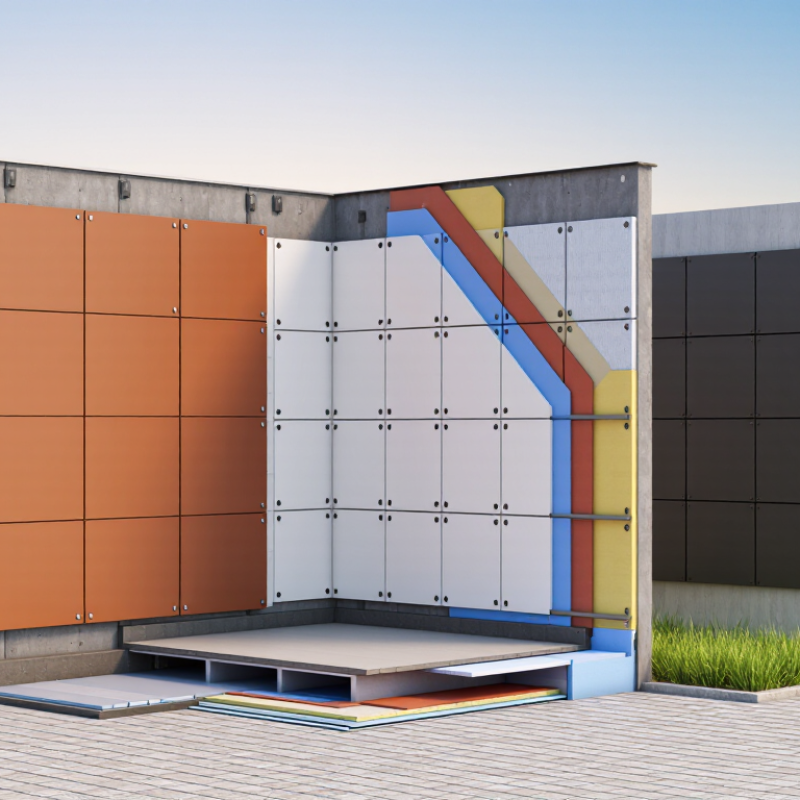
Top 10 Outdoor Wall Board Manufacturers Worldwide

Definition and Scope of Outdoor Wall Boards

Outdoor wall boards are engineered panels designed for exterior vertical surfaces. They protect walls from rain, sunlight, temperature changes, and everyday impact. Unlike indoor boards, they must manage moisture without losing shape or strength. The category includes fiber-cement panels, treated timber boards, composite panels, metal-faced boards, and mineral-based sheets. Some products imitate wood grain or stone. Others provide a clean, modern surface.

The scope covers residential facades, commercial buildings, garden rooms, balconies, service areas, and ventilated rainscreen systems. It may also include decorative boards used beneath eaves or around entrances. However, not every exterior panel is a wall board. Roofing sheets, structural sheathing, and temporary construction barriers serve different purposes. Clear product definitions prevent costly specification mistakes.

In practical site assessments, installers check panel weight, fixing zones, joint movement, drainage paths, and cutting dust. They also review moisture resistance, ultraviolet stability, wind-load performance, fire classification, and maintenance needs. A reliable specification should identify the substrate, cavity depth, fastener type, and local climate. Coastal air, freeze-thaw cycles, and strong afternoon sun can change performance significantly. Appearance alone is not enough.

There is room for doubt.

Manufacturers may describe similar materials differently, so technical data deserves careful comparison. Small gaps around windows can create larger failures than a visible surface scratch. Even experienced teams sometimes underestimate ventilation behind the boards. That weakness should remain part of the evaluation, not be hidden.

Outdoor Wall Boards: Typical Nominal Thickness by Material Category

Outdoor wall boards are exterior cladding panels used for façade protection, weather resistance, thermal performance, and architectural finishing. The chart compares commonly specified nominal thicknesses across major material categories within the outdoor wall-board market scope.

Values represent commonly specified commercial thicknesses in millimetres. Actual specifications vary according to structural requirements, wind loads, insulation systems, fire regulations, installation method, and local building codes.

Key Materials and Performance Standards

Outdoor wall boards must balance appearance with weather resistance, structural stability, and safe installation. Fiber cement boards offer strong moisture resistance and good dimensional stability. High-pressure laminate boards provide sharp colors and scratch resistance, but exposed edges need careful sealing. Aluminum and coated steel panels are lightweight and durable, while engineered wood creates a warmer appearance. PVC-based boards resist rot, although heat movement may affect joints.

Performance standards help separate reliable products from attractive samples. Look for water absorption data, freeze-thaw testing, wind-load performance, and resistance to ultraviolet exposure. ASTM C1185 and ASTM C1186 are useful references for fiber cement testing. EN 13501-1 may indicate reaction-to-fire classification in relevant markets. ASTM E331 can help evaluate water penetration around installed wall assemblies. Test results should match the board thickness, coating, fixing method, and climate.

In practice, installation often decides service life. Leave movement gaps, seal cut edges, and use corrosion-resistant fasteners. Inspect corners and drainage paths before closing the façade. A board can pass laboratory tests yet fail when installers ignore ventilation. That happens more often than expected. Color fading also varies with orientation, pollution, and nearby shade. I would request complete test reports, installation guidance, and batch records before comparing manufacturers. Numbers alone are not enough. A stronger review includes sample cutting, joint inspection, and exposure to the project’s actual weather conditions.

How to Evaluate Global Outdoor Wall Board Manufacturers

Evaluating global outdoor wall board manufacturers requires more than comparing catalog prices. Start with material evidence. Check fiber-cement, WPC, aluminum, or recycled-polymer content through technical datasheets and batch records. Ask for independent tests covering water absorption, freeze-thaw cycling, impact resistance, and fire behavior. ASTM E84 and EN 13501-1 results help compare surface flame performance, although they are not interchangeable.

Climate exposure must shape the shortlist. A coastal project needs salt-spray evidence, while a cold region needs repeated freeze-thaw testing. Request accelerated weathering data, not only attractive showroom samples. ISO 14025 environmental product declarations can clarify carbon impacts and manufacturing assumptions. This matters because the International Energy Agency reports that buildings and construction consume about 30% of global final energy. Still, an EPD does not guarantee a durable product.

Manufacturing reliability deserves equal attention. Review factory audits, quality-control frequency, production capacity, and complaint-response procedures. Ask whether color, thickness, and locking profiles remain consistent across shipments. Global suppliers should provide installation manuals, replacement policies, and local technical support. The World Green Building Council emphasizes whole-life performance, so maintenance intervals should enter the cost model. A lower purchase price may hide repainting, broken fasteners, or difficult repairs. No scorecard is perfect. I would test a small wall section first, because laboratory results can miss site-specific problems.

Top 10 Outdoor Wall Board Manufacturers Worldwide - How to Evaluate Global Outdoor Wall Board Manufacturers

A manufacturer-neutral evaluation framework based on internationally recognized product, quality, environmental, and supply-chain criteria.

Rank Evaluation Dimension What to Evaluate Relevant Standard or Evidence Shortlisting Benchmark Suggested Weight
1 Product Scope and Material Fit Confirm whether the manufacturer produces exterior-grade fibre-cement, metal, HPL, wood-based, mineral, or composite wall boards suitable for the intended climate and building envelope. Technical data sheet, declared thickness, density, moisture movement, dimensional tolerances, and installation manual. A clearly defined outdoor product range with published performance values for the exact board being quoted. 12%
2 Fire Performance Assess reaction to fire, flame spread, smoke development, and combustibility according to the destination market and façade design. EN 13501-1 classification; ASTM E84 surface-burning test; ASTM E136 where non-combustibility is required. Independent test reports for the finished board system, not only raw-material declarations or generic material claims. 15%
3 Weather and Moisture Resistance Review resistance to rain, freeze-thaw cycles, humidity, water absorption, swelling, edge stability, and repeated wet-dry exposure. ASTM C1185 and ASTM C1186 for fibre-cement products; EN 12467 or ISO 8336 where applicable. Product-specific results for water absorption, dimensional movement, and freeze-thaw durability in the intended exposure category. 14%
4 Mechanical Strength and Installation Performance Compare bending strength, impact resistance, fastener holding, panel stiffness, allowable spans, cutting behavior, and installation tolerances. ASTM C1185, EN 12467, manufacturer span tables, fastening instructions, and system engineering calculations. Published minimum strength values in both principal directions, plus tested fixing details for the proposed substructure. 12%
5 UV, Color, and Surface Durability Evaluate resistance to ultraviolet exposure, chalking, fading, coating adhesion, abrasion, graffiti removal, and surface deterioration. ISO 4892-3, ISO 16474-3, ASTM G154, coating specifications, and accelerated-weathering reports where relevant. A documented coating system, stated color-retention warranty terms, and test conditions that match the intended exterior application. 11%
6 Quality Management and Production Control Check process consistency, batch traceability, calibration, nonconformance handling, inspection frequency, and corrective-action procedures. ISO 9001 certificate, factory audit records, quality-control plan, batch certificates, and third-party inspection options. Current certification covering the relevant manufacturing site, with traceable lot identification and documented release testing. 10%
7 Environmental and Health Credentials Review recycled content, responsible sourcing, manufacturing emissions, waste management, product carbon data, and hazardous-substance controls. ISO 14001, ISO 14025 environmental product declarations, EN 15804, FSC chain of custody where wood is used, and safety data sheets. Verifiable site-level environmental certification and transparent product documentation rather than unsupported green marketing claims. 8%
8 Compliance and Technical Documentation Determine whether the supplier can provide declarations, test reports, installation details, warranty terms, maintenance guidance, and local code support. Declaration of Performance where applicable, CE-related documentation where applicable, local building-code approvals, and signed technical submittals. Complete, current, product-specific documentation issued by an accredited laboratory or recognized certification body. 7%
9 Supply Capacity and Export Readiness Assess production capacity, standard lead time, minimum order quantity, packaging, container loading, export experience, and continuity planning. Capacity statement, recent lead-time record, packaging specification, export references, inspection procedure, and agreed delivery terms. A documented supply plan with realistic production slots, protected packaging, and contingency arrangements for large projects. 6%
10 Technical Service and Lifecycle Support Evaluate design assistance, sample availability, mock-up support, installer training, warranty administration, spare materials, and complaint response. Written warranty, service-level commitment, installation training records, project references, and documented claim-resolution process. A named technical contact, clear warranty exclusions, responsive pre-sales support, and lifecycle guidance for cleaning and replacement. 5%
Total Evaluation Weight 100%
Evaluation note: The standards listed above apply according to product type, market, and project specification. Final selection should be based on current, product-specific evidence and independent verification rather than manufacturer claims alone.

Top 10 Outdoor Wall Board Manufacturers Worldwide

Top 10 Outdoor Wall Board Manufacturers Worldwide

The top 10 outdoor wall board manufacturers should be judged beyond production volume. Global demand is shifting toward durable, low-maintenance façades. Grand View Research estimates the global fiber cement siding market will expand steadily through 2030. The International Energy Agency reports that buildings consume about 30% of global energy and create nearly 26% of energy-related emissions. This makes thermal performance increasingly important.

A reliable manufacturer should provide tested resistance to moisture, fire, impact, and ultraviolet exposure. Product data should reference recognized standards, such as ASTM testing or equivalent regional requirements. Environmental Product Declarations also improve transparency. However, a ranking is never perfect. Some manufacturers disclose factory emissions clearly, while others provide limited data. That weakness deserves attention.

Tips: Compare board thickness, water absorption, warranty terms, and installation guidance. Ask for test reports, not only sales claims. Inspect surface texture in natural light; small defects can become obvious on large exterior walls. Also check local climate suitability. A board designed for dry regions may perform poorly under repeated freezing and thawing. Recycled content matters, but it should not replace verified durability. A longer service life may reduce replacement waste, even when the initial price is higher.

Market Trends and Selection Considerations

Top 10 Outdoor Wall Board Manufacturers Worldwide: Market Trends and Selection Considerations

Global outdoor wall board markets are changing with climate pressure, energy costs, and stricter building expectations. Buyers increasingly seek boards with moisture resistance, thermal performance, and stable color. Recycled content is also gaining attention, although environmental claims need careful verification. A product may look sustainable while its full lifecycle remains unclear.

The top ten manufacturers should not be judged by market visibility alone. Compare tested performance, production consistency, warranty terms, and technical support. Ask for independent reports covering water absorption, fire behavior, wind resistance, and dimensional stability. Regional conditions matter greatly. A board suited to a dry inland site may fail near salty coastal air. Installation guidance is equally important, because poor joints can damage even a high-quality panel.

Tips: Request recent test documents and sample boards. Inspect the surface after simulated rain, heat, and impact.

Check whether replacement panels remain available locally. Review the manufacturer’s response time before signing a contract. A low purchase price can hide costly maintenance.

I have found that clear documentation often predicts smoother projects, though it is not a perfect guarantee. Also question unusually broad performance claims. They may sound impressive.

FAQS

What materials should I compare in outdoor wall boards?

Compare fiber-cement, WPC, aluminum, and recycled-polymer content. Request technical datasheets and batch records. Material labels alone are not enough.

Which performance tests matter most?

Ask for water absorption, freeze-thaw, impact, ultraviolet, and fire performance tests. Test reports are stronger than sales claims. Check the testing dates.

How does climate affect manufacturer selection?

Coastal projects need salt-spray evidence. Cold regions need repeated freeze-thaw results. Dry-climate boards may fail under constant moisture.

Are fire ratings directly comparable worldwide?

Not always. ASTM E84 and EN 13501-1 measure related performance differently. Review the complete test scope before comparing results.

What environmental information should manufacturers provide?

Environmental Product Declarations can explain carbon impacts and manufacturing assumptions. They do not prove long service life. Durability still matters.

How can I evaluate factory reliability?

Review factory audits, inspection frequency, capacity, and complaint responses. Check whether thickness, color, and locking profiles stay consistent across shipments.

What support should a global supplier offer?

Look for clear installation manuals, replacement policies, and local technical support. Missing guidance can turn a simple repair into a costly delay.

Is the lowest purchase price usually the best value?

Not necessarily. Repainting, broken fasteners, and difficult repairs may increase lifetime costs. A longer service life can reduce replacement waste.

Should I test boards before placing a large order?

Yes. Install a small wall section first. Observe joints, texture, drainage, and color in natural light. Laboratory results can miss site problems.

Is a manufacturer ranking always reliable?

No ranking is perfect. Some suppliers disclose detailed factory data, while others provide little evidence. I would leave uncertain scores visible, not hide them.

Conclusion

This article presents a practical overview of the global Outdoor Wall Board industry, beginning with the definition, applications, and scope of exterior wall board products. It explains the main material categories, including fiber cement, composite, metal, polymer, and wood-based solutions, while highlighting key performance standards such as weather resistance, fire safety, moisture control, dimensional stability, durability, and environmental responsibility. Readers will also learn how to assess manufacturers through production capacity, quality management, testing procedures, customization options, technical support, supply reliability, and long-term service.

The ranking of the top 10 Outdoor Wall Board manufacturers worldwide is organized around measurable capabilities rather than brand promotion. The article also examines current market trends, including energy-efficient building envelopes, sustainable materials, lightweight installation systems, improved surface finishes, and growing demand for prefabricated construction. Finally, it offers selection considerations to help architects, contractors, distributors, and property owners compare products according to climate, building type, budget, maintenance needs, compliance requirements, and project schedule.

Ethan

Ethan

Ethan is a seasoned marketing professional with a deep expertise in our company's innovative product line. With a passion for sharing knowledge and insights, he takes the lead in regularly updating our corporate blog, where he explores industry trends, product features, and effective marketing......