2026 Best Board Fireproofing Types for Global Buyers?

Time:2026-09-26 Author:Liam
0%

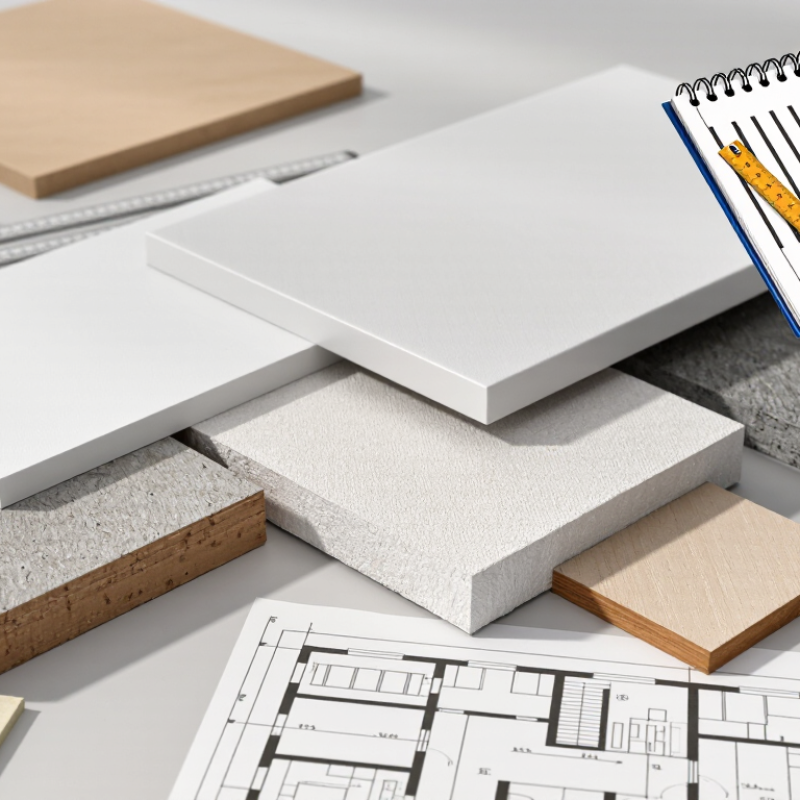
Choosing the right Board Fireproofing is not a simple materials comparison. Global buyers must weigh fire-test evidence, intended use, installation details, and supply consistency. Gypsum boards may suit interior partitions, while calcium silicate and mineral-based boards can serve different demanding applications. Yet a product name alone proves little. Performance depends on the tested assembly, including board thickness, joints, fixings, and supporting structure.

NFPA fire-safety leader Jim Pauley has used the reminder, “Fire is everyone’s fight.” That principle matters when fire-resistant boards are specified: the board is one part of a wider safety system, not a guarantee on its own. Look for traceable test reports and clear installation instructions. Ask whether the evidence matches the wall or ceiling you plan to build. Check the joints, too. Small details matter.

This guide compares board types for buyers working across markets, where terminology, test methods, and project needs may differ. It focuses on practical selection points, not a universal winner. A board that performs well in one tested configuration may not perform the same way in another. That is worth pausing over. Product sheets can look reassuring; site conditions are less tidy. Verify the evidence, discuss installation with qualified professionals, and match the specification to the actual assembly before purchasing.
2026 Best Board Fireproofing Types for Global Buyers?

Define Fire Ratings: ISO 834 Reaches 945°C After 60 Minutes

For global buyers, board fireproofing begins with the fire curve, not a product label. ISO 834 models a standard building fire. At 60 minutes, the furnace temperature reaches approximately 945°C. This figure comes from the formula T = 20 + 345 log10(8t + 1), with t measured in minutes. It describes heating conditions, not the temperature inside every wall or board.

Calcium silicate boards often serve high-temperature protection because they resist shrinkage and maintain shape. Gypsum boards release chemically bound water during heating, delaying temperature rise behind the lining. Vermiculite and cement-based boards can offer different combinations of insulation, strength, and moisture tolerance. The correct choice depends on the tested assembly, joint design, fixing method, and required fire duration.

Do not compare boards by thickness alone. A 12-millimeter panel may perform differently from another 12-millimeter panel. Check independent test reports, declared density, furnace exposure, substrate type, and installation details. ISO 834 exposure does not automatically prove a wall, ceiling, or steel protection system meets every national requirement. That assumption causes costly errors. In practical projects, inspect edge gaps, screw spacing, and penetrations before closing the system. Small installation defects can weaken a carefully tested design. Some published data also leaves uncertainty around aging and site moisture. Buyers should question those limits before approving international specifications.

2026 Best Board Fireproofing Types for Global Buyers?

ISO 834 defines a standard time–temperature fire exposure. The furnace temperature reaches approximately 945°C after 60 minutes, based on the standard curve: T = 20 + 345 log10(8t + 1), where t is time in minutes.

Common board categories used in passive fire protection include calcium silicate, gypsum-based, vermiculite/perlite, and cementitious boards. Actual fire-resistance performance depends on board composition, thickness, joints, framing, installation quality, and tested system certification.

Compare Board Types: Gypsum, Calcium Silicate, Mineral Wool and Cement

Gypsum, calcium silicate, mineral wool, and cement boards serve different fireproofing needs. Gypsum boards contain chemically bound water, which releases steam during heating. They are light, easy to cut, and often cost-effective for interior partitions. Calcium silicate boards remain dimensionally stable at high temperatures. They suit industrial walls, shafts, and service enclosures, but can feel brittle during installation. Mineral wool boards provide non-combustible insulation and strong acoustic performance. Their real weakness is compression at joints. Cement boards resist moisture and impact well, yet they are heavier and may conduct heat faster.

The National Fire Protection Association’s Fire Loss in the United States, 2023 reported more than 1.3 million fires nationwide. That figure shows why tested assemblies matter more than attractive product claims. Fire performance depends on thickness, framing, fasteners, joints, and installation quality. Buyers should compare EN 13501-2 classifications, ASTM E119 results, or ISO 834 test evidence. A board rated alone may perform differently inside a complete wall. A simple ranking can mislead.

Tips: Request full test reports, not only brochures. Check the tested thickness and joint design. For humid buildings, inspect water resistance and edge stability. Mineral wool may need careful protection from compression. Calcium silicate can require slower handling. Cement board looks robust, but weight can increase structural demands. My own preference changes by project; fire rating alone never settles the decision.

Check Reaction-to-Fire Classes: EN 13501-1 Rates Products from A1 to F

2026 Best Board Fireproofing Types for Global Buyers?

For global buyers, the key question is not simply “Is this board fireproof?” Check EN 13501-1 first. This European standard classifies reaction to fire from A1 to F. A1 products make no contribution to fire. A2 products provide limited contribution. Classes B, C, D, E, and F indicate progressively weaker performance. Small details matter. Smoke and burning droplets also receive ratings, such as s1 and d0.

Mineral-based boards often target A1 or A2 performance. Calcium silicate, cement-based, and mineral wool boards may suit different wall or ceiling assemblies. However, the board’s class does not automatically prove a fire-rated wall. EN 13501-2 evaluates fire resistance, including integrity and insulation. NFPA’s Fire Loss in the United States During 2023 reported about 1.39 million fires and USD 22.1 billion in direct property damage. Material selection deserves more than a catalogue claim.

Energy performance creates another practical tension. The 2024 Global Status Report for Buildings and Construction states that buildings and construction consumed 32% of global energy in 2022 and produced 34% of global carbon dioxide emissions. A dense fire board may perform well but increase weight or installation effort. A lightweight board may reduce handling time, yet require careful joint treatment. I have seen projects rely on one test sheet too quickly. Recheck thickness, fixing method, substrate, moisture exposure, and the exact tested assembly. Certification is useful, but context still decides performance.

Match Tested Assemblies: ASTM E119 Includes 1-, 2- and 3-Hour Ratings

2026 Best Board Fireproofing Types for Global Buyers?

ASTM E119 ratings describe how a tested building assembly performs during a standard fire test. They do not assign a one-, two-, or three-hour rating to a board in isolation. The result depends on the full build-up: board type and thickness, framing, fasteners, joints, and installation details. Details matter. A two-hour wall tested with one stud spacing may not match a site-built wall with wider spacing.

For buyers comparing fireproofing boards, ask for the exact tested assembly and its report. Check whether the proposed board layers, joint treatment, framing, and support conditions match the tested design. Even a small change around a corner or service opening can affect performance. One detail is easy to overlook: the board may be suitable, while the chosen fixing pattern is not. Confirm requirements with the project’s fire-protection professional and the relevant approval authority.

Tips: Request the assembly’s 1-, 2-, or 3-hour test documentation, then compare it line by line with the drawings. Keep installation records and inspect seams before they are concealed. If a detail differs, pause and seek a documented alternative rather than assuming the rating still applies.

Verify Global Compliance: Compare EN 13501-2, ASTM E119 and Local Codes

For global buyers, a fire-rated board is only as credible as its tested assembly. EN 13501-2 classifies fire resistance using terms such as R (load-bearing capacity), E (integrity), and I (insulation), with durations stated in minutes. ASTM E119 reports performance in hours under its own test conditions. These results are not interchangeable: furnace exposure, specimen loading, restraint, and pass criteria differ. Check the certificate and test report, not just the headline rating.

Details matter. A 60-minute result may apply only to a specific board thickness, joint treatment, fixing pattern, and supporting wall or frame. Changing a screw spacing or leaving a joint untreated can invalidate the comparison. NFPA’s report Fire Loss in the United States During 2023 estimated 1.389 million fires and 3,670 civilian fire deaths. That scale makes verified protection more than a paperwork exercise. Still, a test rating alone cannot predict every site condition.

Before purchase, confirm that the local authority accepts the cited standard and edition, then check its adopted code, occupancy rules, and required fire-resistance period. Ask for the complete assembly report and installation details. I would also verify whether the certificate covers the exact board configuration being quoted; this step is easy to miss. Local amendments can change the answer. A familiar label is not enough.

2026 Best Board Fireproofing Types for Global Buyers? — Verify Global Compliance: Compare EN 13501-2, ASTM E119 and Local Codes

Board or system type Typical construction and uses Potential advantages Key limitations to check Evidence for EN-based projects Evidence for ASTM-based projects Buyer verification points
Gypsum fire-protection board Gypsum core, often reinforced with glass fibre or other additives and faced with paper or glass mat. Used in tested wall, ceiling, shaft-wall and protection systems. Widely used in building interiors; can provide fire resistance as part of a specified partition, ceiling or encasement assembly. Moisture exposure, impact resistance, joint treatment, fasteners, framing and installation details can affect suitability and performance. A board’s thickness alone does not establish a fire-resistance rating. Request the relevant fire-test report and the applicable EN 13501-2 classification for the complete construction. The supporting test may use an applicable EN method, such as EN 1364 for non-loadbearing elements. Request a fire-test report for the complete assembly to ASTM E119 or an accepted equivalent specified by the authority having jurisdiction. Verify that the reported construction matches the proposed installation. Check board type and thickness, framing, joints, penetrations, fasteners, orientation, permitted substitutions and whether the intended wall or ceiling configuration is covered.
Calcium silicate fire-protection board Rigid mineral board used in some tested partitions, service enclosures and protective systems for structural elements or building components. Can be suitable where a rigid, dimensionally stable board system is required; available system designs vary by application and market. Properties differ by formulation and product. Confirm density, moisture behaviour, fixing method, joint design and whether the exact application has been tested. Look for an EN 13501-2 classification based on the relevant fire-resistance test for the intended element. Confirm the classification’s scope and field of application. Look for ASTM E119 test evidence for the specific assembly or protection design and the required acceptance documentation under the project’s adopted code. Confirm whether the evidence covers walls, ceilings, ducts or structural protection as applicable; these applications are not interchangeable. Check tested thickness and support details.
Mineral-wool board protection system Non-combustible mineral-fibre boards or slabs used in some tested fire-resisting partitions, service enclosures and protection systems. The complete system may include facings, fixings or other components. May provide insulation as well as fire protection when incorporated into a tested design. Some products are intended for specific industrial or building applications. Fire performance depends on the product and assembly; do not infer a fire-resistance period from non-combustibility or insulation properties alone. Compression, joints, supports and moisture exposure may matter. Request the applicable EN 13501-2 classification and supporting test evidence for the exact end use; reaction-to-fire classification alone is not evidence of fire resistance. Request ASTM E119 evidence for the complete construction where that method is required. A material reaction-to-fire or combustibility result is not an ASTM E119 hourly rating. Verify board density and thickness, joint layout, fixing and support spacing, any required facing, and whether the tested system covers the project’s orientation and exposure conditions.
Vermiculite- or perlite-based fire-protection board Lightweight mineral boards used in some building protection and enclosure systems; product formulations and intended applications vary. Can offer a relatively lightweight board option where a tested system is available for the required construction. Performance, strength and moisture response vary by formulation. Do not use generic material descriptions as evidence of a particular fire-resistance duration. Require an EN 13501-2 classification supported by the appropriate test for the actual element and installation details. Require ASTM E119 test documentation for the assembly where specified; confirm the tested construction corresponds to the proposed design. Check product composition, thickness, mechanical fixing, joint treatment, environmental limits and the report’s permitted variations.
Fire-protection board used for structural steel A project-specific board encasement around steel members, using one or more board layers and a defined fixing and joint arrangement. Can protect steel when the complete system has been assessed for the member type, required fire exposure and design conditions. Required protection depends on the steel section, section factor, design temperature assumptions, exposure on one or more sides and the required fire-resistance period. A wall-board rating cannot be assumed to apply to steel. Request the relevant test or assessment and classification for the structural element under the applicable EN fire-resistance framework, including the report’s stated scope and limitations. Request ASTM E119 evidence or other documentation specifically accepted for the structural protection design and the project’s code pathway. Match the tested steel section or permitted section range, board layers and thickness, edge and joint details, fixings, exposure conditions and required rating.
Local-code and approval check Applies to every board type and every proposed assembly before procurement or installation. Helps establish whether the evidence is acceptable in the project’s jurisdiction and for the intended occupancy and building element. EN 13501-2 and ASTM E119 are not interchangeable ratings. EN 13501-2 classifies fire resistance using applicable test evidence; ASTM E119 is a fire-test method. Local authorities may require specific editions, tests, listings or additional evidence. Confirm the adopted national rules, required classification (for example, the relevant R, E or I criteria where applicable), test standard edition and any national annex or project-specific requirement. Confirm the locally adopted building code and required test method. In some U.S. code pathways, ASTM E119 or UL 263 may be referenced; acceptance depends on the adopted code and authority having jurisdiction. Obtain current test reports, classification or listing documents, installation instructions and any required third-party certification. Have the design team or authority having jurisdiction confirm acceptance before ordering.

Important: Fire resistance is a property of a tested or assessed construction, not a board in isolation. Confirm the complete assembly, applicable test evidence, permitted variations and locally adopted requirements before specifying or purchasing.

FAQS

What does the ISO 834 fire curve represent?

It models furnace heating during a standard building fire. After 60 minutes, the furnace reaches about 945°C. It does not show every board’s internal temperature.

Which board types are used for fire protection?

Gypsum releases bound water and delays heat transfer. Calcium silicate resists shrinkage and keeps its shape. Mineral wool insulates well but needs protected joints. Cement boards resist moisture and impact, yet they are heavy.

Is a thicker board always safer?

No. Two 12-millimeter boards can perform differently. Check density, substrate, joints, fasteners, and tested assembly details. Thickness alone misleads.

What is the difference between reaction-to-fire and fire resistance?

Reaction-to-fire describes how a product contributes to fire. Classes range from A1 to F. Fire resistance evaluates complete assemblies, including integrity and insulation. A board rating cannot approve an entire wall.

What installation details can reduce fire performance?

Inspect edge gaps, screw spacing, joints, and service penetrations. Small openings can weaken a tested design. Details matter more than appearance.

What documents should buyers request?

Request complete independent test reports, not only brochures. Confirm tested thickness, framing, fixing method, substrate, and fire duration. Read the limitations.

How does moisture affect board selection?

Humid areas require checks for water resistance and edge stability. Cement boards may tolerate moisture better, while other boards need protection. Published aging data may remain incomplete.

How should buyers balance fire performance, weight, and installation effort?

Dense boards may provide strong protection but increase structural loads. Lightweight boards are easier to handle but need careful joint treatment. My preference changes by project. I would recheck every assumption.

Conclusion

Choosing the right Board Fireproofing solution in 2026 requires more than comparing product materials. Buyers should first understand fire exposure and rating methods: under ISO 834, temperatures can reach approximately 945°C after 60 minutes, creating demanding conditions for protective boards. Common options include gypsum, calcium silicate, mineral wool, and cement boards, each offering different strengths in thermal resistance, weight, moisture performance, installation, and durability.

Reaction-to-fire classification is another essential consideration. EN 13501-1 ranks products from A1 to F, helping buyers evaluate combustibility and smoke or flame behavior. However, product classification alone is not enough; the complete wall, ceiling, or structural assembly must be tested. ASTM E119 evaluates systems for one-, two-, and three-hour fire-resistance periods, while EN 13501-2 and local building codes may apply different testing and documentation requirements. Global buyers should therefore match the board to a tested assembly, confirm certification for the target market, and review installation details before making a final decision.

Liam

Liam

Liam is a dedicated marketing professional with a profound expertise in the industry, where he excels at highlighting the unique advantages of our core products. With a keen understanding of market trends and consumer needs, Liam frequently updates our company’s professional blog, providing......