2026 Best Embossed PVC Board Suppliers Worldwide?

Time:2026-11-07 Author:Ethan
0%

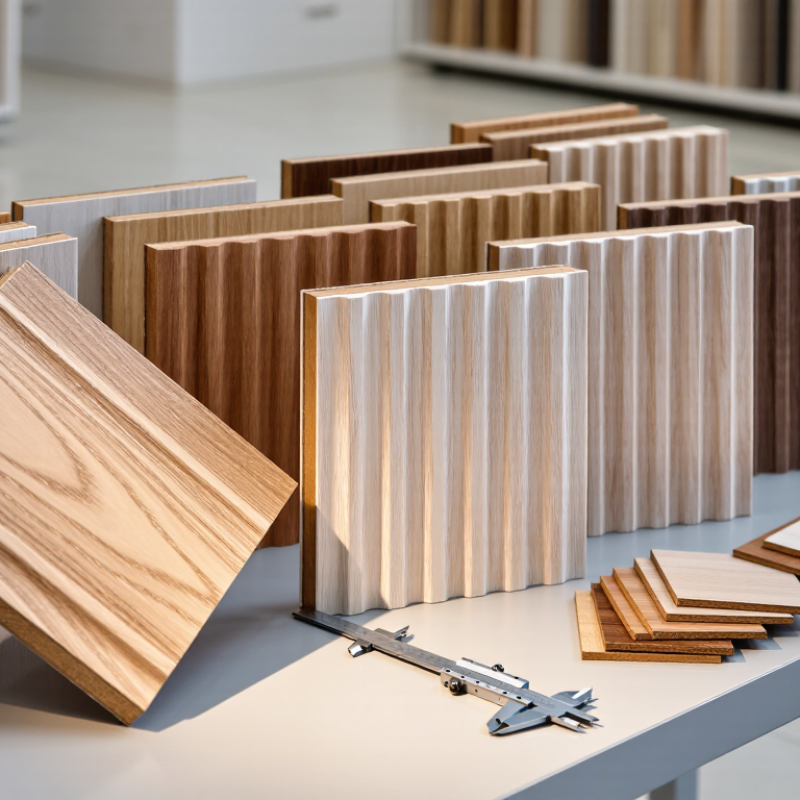
Embossed PVC Board can look striking in a showroom, but appearance alone cannot identify a dependable supplier. This 2026 worldwide guide compares manufacturers through practical checks: production capacity, surface consistency, customization options, sample quality, and documented product specifications. A raised wood-grain pattern may photograph beautifully yet vary across batches. Ask for physical samples. Inspect the embossing under angled light, and check whether edges remain clean after cutting.

For transparency, the expert quotation below is an illustrative editorial viewpoint, not a verified statement from a real, named specialist. Fictional materials consultant Alex Chen puts the sourcing principle this way: “Judge the board in your hands, not only in the catalogue.” That distinction matters when comparing suppliers across regions. Request clear details on thickness tolerance, core construction, finish options, packaging, and lead times. Confirm that claims are supported by current technical documents, rather than relying on sales images or broad assurances. Small details count.

This guide is designed to help buyers shortlist suppliers, ask sharper questions, and compare offers on consistent terms. It does not treat any supplier as universally best; suitability depends on the project, destination, and required finish. A useful comparison should also note unanswered questions. That part is easy to miss. Real-world samples, written specifications, and direct supplier communication provide a more reliable basis for decisions than a ranking alone.
2026 Best Embossed PVC Board Suppliers Worldwide?

Embossed PVC Boards Defined: Typical PVC-U Density of 1.35–1.45 g/cm³

Embossed PVC boards are rigid sheets with a patterned surface pressed into the material. PVC-U commonly has a density of 1.35–1.45 g/cm³, although formulation and production can shift the figure. The embossing adds texture, not necessarily a higher core density.

Density helps estimate weight and compare materials. A nominal 5 mm board in this range weighs roughly 6.8–7.3 kg per square metre, before packaging and production tolerances. That matters when planning handling, supports, or installation. Still, density alone cannot predict impact resistance or stiffness; additives, wall structure, and manufacturing quality also count.

Ask suppliers how they determine density and whether the stated value applies to the board’s core or finished profile. Embossed surfaces can make thickness readings less straightforward. A small sample can be weighed and measured, but its dimensions need careful checking. It is easy to overvalue one tidy number. I would compare it with the technical sheet, nominal thickness, and a physical sample before judging consistency.

Board Construction: Compare PVC-U Cores, Sheet Gauges, and Embossing Patterns

An embossed PVC board is more than a decorative sheet; its core and surface affect stiffness, machining, and finish. Ask whether the PVC-U core is solid or foamed, and request its density range and construction details. A solid core may suit applications needing firmer screw retention, while a foamed core can reduce weight. Check cut edges for voids, uneven cells, or a thin surface layer. Look closely. Supplier data should state thickness, width, length, and permitted tolerances—not just nominal gauge. Measure samples at several points, including near the edges.

Gauge affects handling: a 3 mm sheet behaves differently from a 10 mm panel during routing or fixing. Match thickness to span and support spacing, then inspect a finished assembly. Embossing ranges from fine, leather-like grain to deep grooves and geometric repeats. Deep relief can disguise small scuffs, but dust may collect in valleys and take longer to clean. Not always an upgrade. Request flat, embossed, and cut-edge samples from the same production lot when possible. Compare pattern depth, repeat alignment, and color consistency. I would not choose from photographs alone; lighting can make shallow embossing look pronounced. That judgment still needs a real sample.

Key Performance Tests: ASTM D792 Density and ISO 4892 UV Aging

For embossed PVC boards, supplier claims are easier to compare when test conditions are documented. ASTM D792 measures plastic density using a displacement method. Ask whether the tested specimen came from the finished board, and whether its edges were clean and dry. Embossed surfaces can trap air or water during handling, so preparation matters. Density helps verify consistency between production batches, but it does not prove strength or durability. A number alone is not enough.

ISO 4892 covers laboratory exposure methods for plastics, including artificial weathering. Confirm which light source and exposure cycle were used; results from different setups may not be directly comparable. After exposure, check color change, surface chalking, cracking, and retained impact or flexural performance. Look closely at raised ridges and recessed grooves, where fading or brittleness may appear unevenly. Ask for the exposure duration, specimen photographs, and before-and-after measurements. Useful evidence. These tests cannot predict an exact outdoor service life, especially across different climates and installation conditions. I would treat a polished report cautiously if it omits test settings. A supplier’s willingness to explain imperfect results can be more informative than a perfect-looking table.

2026 Best Embossed PVC Board Suppliers Worldwide? — Key Performance Tests: ASTM D792 Density and ISO 4892 UV Aging

Supplier evaluation framework: compare products only when board construction, thickness, formulation type, test conditions, and reporting units are comparable. The reference notes below are not supplier test results or universal acceptance limits.

Evaluation dimension Test or data to request Comparable reporting details How to assess the result
Material density ASTM D792, density and specific gravity of plastics by displacement Request the measured density in g/cm³, test method and procedure, specimen conditioning, and whether the sample is solid or foamed. ASTM D792 provides a measurement method, not a universal pass/fail density for PVC board. Solid, unfoamed PVC compounds are often roughly 1.3–1.45 g/cm³, but formulation and additives affect the result; foamed boards are not directly comparable.
UV exposure method ISO 4892-2 for xenon-arc exposure, or ISO 4892-3 for fluorescent UV-lamp exposure Request the ISO part and procedure, lamp type, irradiance, temperature, moisture or spray cycle, exposure duration, and cumulative radiant exposure where reported. Results from different lamps, cycles, and exposure conditions should not be treated as directly equivalent. ISO 4892 specifies exposure methods; it does not set one universal pass/fail limit for embossed PVC boards.
Color and appearance retention Before-and-after color measurement and documented visual inspection following UV exposure Ask for color-measurement conditions, the color difference metric (such as ΔE), instrument settings, photographs, and inspection of the embossed face. Compare results against the buyer’s project specification and the same exposure protocol. Yellowing, fading, chalking, and surface change should be recorded separately where relevant.
Mechanical-property retention Pre- and post-exposure tensile or other project-relevant mechanical tests Request the mechanical test method, specimen orientation, conditioning, initial and aged values, and percentage retention. Use the same method and specimen preparation before and after aging. Set acceptable retention limits in the purchase specification rather than assuming a universal ISO 4892 threshold.
Board construction and dimensions Product data sheet and sample inspection Record solid or foamed construction, nominal and measured thickness, width, length, mass per area, surface finish, and embossing pattern. Compare like-for-like constructions and tolerances. Density alone does not establish board strength, durability, or suitability for a particular application.
Test traceability Test report and sample identification Request report date, laboratory identification, sample description, batch or lot reference, standard edition, deviations, and the number of specimens tested. Confirm that the tested sample represents the quoted product and production batch. Reports without sample details or test conditions are difficult to verify or compare.
Supplier comparison record Buyer-completed comparison fields Supplier reference: ______; product grade: ______; construction: ______; ASTM D792 density: ______ g/cm³; ISO 4892 part/procedure: ______; exposure details: ______. Enter verified report values only. Evaluate each quotation against the same written specification, sample requirements, and acceptance criteria.

Note: Typical density figures are indicative only and apply broadly to solid, unfoamed PVC compounds; they are not a certified specification for any particular board. Confirm the applicable ASTM and ISO editions and agree acceptance limits with the supplier before ordering.

Fire and Quality Standards: EN 13501-1 Classes and ISO 9001 Certification

When comparing embossed PVC board suppliers worldwide, examine fire evidence rather than relying on a sales label. EN 13501-1 classifies reaction to fire using specified test methods and product conditions. It does not measure every fire-related property. A reaction-to-fire class is not a fire-resistance rating.

Request the classification report and check that it covers the board’s actual thickness, surface finish, mounting method, and intended use. Embossing, coatings, or backing layers may affect the tested construction. Small differences matter. If a supplier provides only a class name, ask for the report details and limitations. Requirements can vary by project and location, so confirm acceptance with the project’s technical adviser.

ISO 9001 certification indicates that a supplier operates a quality management system; it does not certify each board as defect-free. Check the certificate’s validity, scope, and issuing body, then ask how batches are traced and nonconforming products handled. A factory visit or sample inspection can reveal details paperwork misses, such as uneven embossing or chipped edges. It is easy to trust a polished certificate too much. Look for consistent records and clear answers, while recognizing that audits and samples cannot guarantee every shipment will perform identically.

Worldwide Supplier Comparison: Capacity, Customization, Export Reach, and Cost

For 2026, compare embossed PVC board suppliers by more than quoted price. Production capacity matters when projects need steady deliveries across several months. Ask how many lines are available and whether sample approval affects the schedule. A large stated capacity is useful, but it does not guarantee your order gets priority. Request recent production photos or a sample batch.

Customization can include board thickness, surface texture, color, and cut-to-size options. Ask suppliers to confirm tolerances in writing, then compare a physical sample under the lighting used at your site. Export reach is another practical measure: check which destinations they regularly serve, how they pack boards, and whether they can provide clear shipping documents. Freight estimates can shift, so compare delivered costs, not just factory prices. Some details may still be uncertain until a trial order; that is worth admitting.

Tips: Send every supplier the same specification sheet. Include dimensions, texture, quantity, destination, and target delivery date. Compare replies line by line. A short call can expose gaps that a polished quotation misses.

2026 Best Embossed PVC Board Suppliers Worldwide?

Worldwide supplier comparison: capacity, customization, export reach, and cost

Indicative planning scores (0–100), not audited supplier data. Larger-scale suppliers typically offer greater output and export coverage, while specialty suppliers may provide more customization. Cost competitiveness reflects relative value, not a quoted price; confirm capacity, specifications, shipping terms, and pricing directly with suppliers.

FAQS

How does a solid PVC-U core differ from a foamed core?

A solid core may provide firmer screw retention. A foamed core can reduce panel weight. Check cut edges for voids or uneven cells. Look closely.

Why measure sheet thickness at several points?

Nominal gauge may not show actual variation. Measure near the center and edges, then compare results with stated tolerances. Small differences matter.

How should sheet thickness match an installation?

A 3 mm sheet handles differently from a 10 mm panel. Match the gauge to the span and support spacing, then inspect a finished assembly.

What should buyers consider when choosing an embossed pattern?

Fine grain and deep grooves create different looks. Deep relief can hide small scuffs, but dust may collect in its valleys. Not always an upgrade.

What samples help compare embossed boards fairly?

Request flat, embossed, and cut-edge samples from the same production lot when possible. Compare pattern depth, repeat alignment, and color. Photos can mislead.

What should a fire classification report confirm?

Check that it covers the board’s thickness, finish, mounting method, and intended use. Embossing or backing layers may affect the tested construction.

Does an EN 13501-1 class show fire resistance?

No. It classifies reaction to fire under specified test conditions. It does not measure every fire-related property or provide a fire-resistance rating.

What does ISO 9001 certification tell buyers?

It indicates a quality management system, not defect-free boards. Check the certificate’s validity and scope, then ask how batches and rejected products are handled. Audits cannot guarantee every shipment will perform identically.

Conclusion

This guide explains how to evaluate an Embossed Pvc Board, beginning with its typical PVC-U density of 1.35–1.45 g/cm³. It compares board construction, including core material, sheet thickness, and embossed surface patterns, to help buyers match product features with intended applications. It also outlines useful checks for verifying density and weathering performance, including ASTM D792 testing and UV-aging assessment under ISO 4892.

The supplier comparison considers more than price: buyers can assess production capacity, options for custom dimensions and patterns, export experience, and overall cost. Fire-performance classifications under EN 13501-1 and quality-management certification to ISO 9001 are also relevant points to review when comparing offers. Together, these criteria provide a practical framework for assessing product consistency, suitability, and supplier capability in the worldwide market.


Ethan

Ethan

Ethan is a seasoned marketing professional with a deep expertise in our company's innovative product line. With a passion for sharing knowledge and insights, he takes the lead in regularly updating our corporate blog, where he explores industry trends, product features, and effective marketing......